Motorcyclists Can Gain Extra Traction on a Wet Road Surface by
Affiliate iii
Affiliate 3: Your Driving
Good driving is based on practice and being alarm at the wheel. When driving, y'all must make sure that nothing interferes with your ability to run across the road, react to situations or operate your vehicle properly. You must wait down the road, to the sides and behind your vehicle and be alert for unexpected events. Be warning to what is going on around you lot and do non have your eyes off the road for more than a few seconds at the time. Do not have objects within your vehicle that might interfere with your power to drive safely. This might include objects that obstruct your view of the road or mirrors.
Bad Driving Habits: Good drivers develop habits that focus their total attention on driving. Some drivers tin develop bad habits that tin be very dangerous when driving.
Some bad habits that take your attention away from driving are:
- Driving ill, upset or angry.
- Driving while eating or drinking.
- Driving while adjusting the radio or changing CDs/tapes.
- Driving while calling, answering or talking on a mobile phone.
- Reading while driving.
Getting Fix to Drive
Before you starting time your engine:
- Make sure all windows are clean. Remove anything that blocks your view of the road.
- Adjust the seat so you lot tin can reach all controls.
- Adjust the inside and exterior rearview mirrors. You should not take to lean frontwards or backward to utilise them.
- Lock all car doors.
- Put on your condom belts. Ask all passengers to do the same.
- Make sure your car is in park or neutral gear before starting the engine.
Never move your car until you have looked in front, behind and to the side for pedestrians and oncoming traffic. Then, bespeak and pull into traffic when safe.
Defensive Driving
Defensive driving means doing all you tin to foreclose crashes. Every bit a defensive driver, you will "requite" a little. You lot volition change your driving to fit the conditions conditions, the way you feel, and the actions of other drivers, bicyclists and pedestrians.
Follow these steps to avoid crashes:
- Look for possible danger. Think nigh what might happen. If in that location are children playing by the road, program what you will do if i runs or rides into the street.
- Empathise what can exist done to foreclose a crash. See the defensive driving tips which follow as well as Handling Emergencies.
- Act in time. Once y'all take seen a dangerous situation, human activity right away to foreclose a crash.
Utilize these defensive driving tips if you come across that you are near to exist involved in a crash:
- It is ameliorate to swerve right instead of toward oncoming traffic to preclude a crash.
- Hitting a row of bushes is better than hit a tree, post or solid object.
- Hitting a vehicle moving in the same direction as you are is meliorate than hitting a vehicle caput-on.
- It is better to drive off the route than skid off when avoiding a crash.
- It is better to hit something that is non moving instead of a vehicle moving toward you.
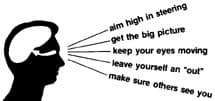
When You Support
Bank check behind your vehicle earlier you get in. Children or small objects cannot be seen from the driver's seat. Place your right arm on the back of the seat and turn around so that you lot can await directly through the rear window. Exercise not depend on your rearview or side mirrors equally you lot cannot see direct behind your vehicle. Back slowly, your vehicle is much harder to steer while you lot are backing. Whenever possible use a person exterior the vehicle to assist you lot back up.
Avoiding Rear-cease Collisions
Many crashes happen because one vehicle runs into the back of another ane. Here are some things y'all tin can do to lower the risk of someone running into the rear of your vehicle.
- Bank check your brake lights often to make sure they are clean and working properly.
- Know what is going on behind y'all. Use your rearview mirrors.
- Betoken well in advance for turns, stops and lane changes.
- Slow down gradually. Avoid whatever sudden actions.
- Drive with the flow of traffic (within the speed limit). Driving too slowly can be as dangerous as driving too fast.
- To avoid striking the vehicle in front of y'all, proceed at least two seconds following distance. This is done by post-obit the instructions found under the department, Minimum Safe Following Distances.
Basic Driver Improvement
Whatever driver can have a basic driver comeback form. The course teaches ways of keeping crashes from happening. I driver can sign up, or a group tin can ask for a class. Consult your yellow pages under, Driving Educational activity , for the location of the schools.
Rubber Belts
The driver and front seat passenger must wear seat belts. This seat chugalug law applies to passenger cars manufactured beginning with the 1968 model year, and trucks kickoff with the 1972 model twelvemonth.
It is unlawful for whatever person to operate a vehicle in this land unless every passenger of the vehicle under the age of 18 is restrained by a safety chugalug or by a child restraint device, regardless of seating position.
If the passenger is xviii years of age or older and fails to habiliment a seat belt when required by law, the passenger will be charged with the violation.
The law exempts the following from the seat chugalug requirements:
- Any person certified by a dr. every bit having a medical condition that causes the seat belt utilise to be inappropriate or dangerous.
- Employee of a newspaper home delivery service while delivering newspapers on domicile delivery routes.
- School buses.
- Buses used for transportation of persons for compensation.
- Farm equipment.
- Trucks of a cyberspace weight of more than 5,000 pounds.
- Motorcycle, moped or bicycle.
In a crash, you are far more likely to be killed if you are non wearing a safety belt. Wearing shoulder belts and lap belts make your chances of living through a crash twice as proficient.
In a crash, safety belts:
- Keep you from being thrown from the vehicle. The take chances of death is 5 times greater if yous are thrown from a vehicle in a crash.
- Proceed you from being thrown against parts of your vehicle, such every bit the steering bicycle or windshield.
- Keep yous from being thrown against others in the vehicle.
- Keep the driver behind the wheel, where he or she can control the vehicle.
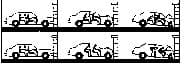
Prophylactic BELTS Relieve LIVES!
Wear a lap belt around your hips, not your stomach. Fasten the belt snugly. Simply wear a shoulder belt with a lap belt. Don't just use your prophylactic belt for long trips or high-speed highways.
More than than half of the crashes that cause injury or death happen:
- at speeds less than twoscore mph, and
- inside 25 miles of domicile.
Protecting Children
ALL CHILDREN 5 YEARS Old OR YOUNGER MUST Utilise A RESTRAINT DEVICE WHEN RIDING IN A MOTOR VEHICLE.
The number one killer of immature children in the U.s.a. is traffic crashes in which children were non restrained at all. Over 90 percent of the deaths and lxxx percentage of the injuries in car crashes could exist prevented by using crash-tested child restraints.
Children should exist secure in the rear seat. Never secure a child in the front passenger side, specially if your vehicle has an air bag.
The police requires every driver to properly secure children five years of age or younger in child restraint devices riding in a passenger automobile, van, or pick-up truck, regardless of whether the vehicle is registered in this state. Infant carriers or children's car seats must exist used for children three years one-time and younger. For children aged 4 through 5 years, a separate carrier, an integrated child seat or a seat belt may be used. All baby carriers and machine seats must be crash-tested and approved by the U.S. Regime.
Children existence carried or riding bicycles should wear properly fitted bicycle helmets.
What is the Best Child Seat?
- The ane that fits your kid.
- The one that fits your vehicle.
- The one that you will apply correctly every time.
For more information on the best kid seat, please visit: http://www.fhp.state.fl.the states/html/CPS and obtain information on occupant Protection and Child Passenger Condom News.
Leaving Children Unattended or Unsupervised in Motor Vehicles
Do non leave children unattended or unsupervised in a motor vehicle, and never leave a child unattended for any flow of time if the motor of the vehicle is running or if the health of the kid is in danger.
Alarm: WHEN IT'S HOT OUTSIDE, Exercise NOT LEAVE CHILDREN UNATTENDED!
On a hot summer mean solar day, the interior of a car tin become dangerously hot. One study establish that with the windows up and the temperature outside at 94 degrees, the inside of a car could exist 122 degrees in simply one-half an 60 minutes, or 132 degrees after an hour.
Speed Limits
Speed causes many crashes. More drivers are convicted of speeding than any other offense. To avoid being fined or involved in a crash, obey the speed limits.
Speed is very important in a collision. If you double the speed of a car, y'all increment its forcefulness of bear upon 4 times. If y'all triple the speed, the bear on is ix times as great.
lxx Does Not Always Mean 70
Call back that speed limits show the fastest speed you may drive under good conditions. You are responsible for adjusting your driving speed to the road conditions. For example, if the weather is bad or at that place is a lot of traffic, y'all must drive more slowly than the posted speed. The safe speed is the 1 that allows you to take consummate control of your vehicle.
Florida "Standard" Speed Limits | |
| Municipal Speed Areas | 30 |
| Business or Residential Areas | thirty |
| Rural Interstate Limited | seventy |
| Limited Admission Highways | seventy |
| All Other Roads and Highways | 55* |
| School Zone | 20 |
*The 55 MPH maximum speed limit is still in result in Florida except where otherwise posted. Speed limits are 70 MPH on some rural interstate highways. Speed limits may be changed on other multi-lane highways. Drivers should not assume because the expanse appears to be rural, the limit is seventy MPH. Observe and obey the posted speed signs as there may be frequent changes from area to surface area along the selected roads and highways.
Driving Too Slowly is also Against the Police force
Drive with the flow of traffic (within the speed limit). You should non drive and so slowly that you block other vehicles moving at normal, safe speeds. You lot can exist issued a ticket for driving too slowly.
Post-obit Officer's and Firewoman's Instructions
If you are stopped by a law enforcement officer, pull off immediately to the extreme right, clear of traffic when possible. Turn off your engine. Reduce your headlights to the parking light position at dark. Sit calmly and follow the instructions of the officer. You must follow whatsoever lawful order or direction of (ane) any constabulary officer or (2) any fireman at the scene of a fire who is directing traffic. If a police officer is directing traffic where there are signal lights, obey the officer — not the signals.
Crossing Intersections
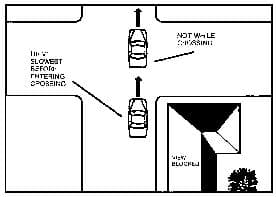
More crashes happen at intersections than whatsoever other identify. Exist very conscientious when approaching whatsoever intersection or driveway.
- Look both means and exist set up to brake or stop.
- Drive at the slowest speed but before entering the intersection, non while crossing.
- Practice not pass or change lanes.
- Be aware of vehicles backside you. Will they be able to stop if necessary?
If y'all are stopped, look for bicyclists and pedestrians who may be crossing the intersection from either direction.
Correct-of-mode
Who has the right-of-way in Florida? The answer is no one! The law only says who must yield (give up) the right-of-way. Every driver, motorcyclist, moped rider, bicyclist and pedestrian must do everything possible to avoid a crash.
Stop Signs
You must yield the correct-of-mode to all other traffic and pedestrians at stop signs. Move forward only when the road is clear. At four-way stops, the first vehicle to end should move forward first. If two vehicles reach the intersection at the same time, the driver on the left yields to the driver on the correct.
Open Intersections
An open intersection is one without traffic command signs or signals. When you enter i, y'all must yield the correct-of-fashion if:
- A vehicle is already in the intersection.
- Yous enter or cantankerous a state highway from a secondary road.
- You enter a paved road from an unpaved road.
- You plan to make a left turn and a vehicle is approaching from the reverse direction.
When ii cars enter an open intersection at the same time, the driver on the left must yield to the driver on the right.
Roundabouts
Roundabouts are a new type of intersection, which improves traffic flow and reduces traffic crashes. Virtually roundabouts do non require stopping, which allows vehicles to move continuously through intersections at the same low speed. Roundabouts are designed to motility all traffic through a counterclockwise management. Vehicles approaching the roundabout yield to circulating traffic; however, drivers must obey all signs to determine the correct correct-of-way in the roundabout.
Safety Rules for Pedestrians
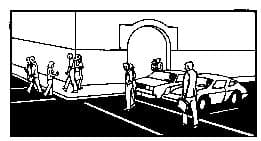
- Look to the left and the right earlier stepping off any curb.
- Cross only at intersections or designated crosswalks. Drivers are e'er more than alert for pedestrians when they approach intersections.
- Cantankerous with the green light or "WALK" indicate. Make sure you have enough time to cross. Although the motorist must yield, the motorist may not come across you in time.
- While walking along a highway, ever walk on the shoulder on the left side, facing traffic. Wear low-cal colored article of clothing or apply a flashlight to brand you more visible to drivers at night.
Pedestrians
It is the motorist'southward responsibility to do everything possible to avoid colliding with any pedestrians. Bicyclists, skaters and skateboarders in a crosswalk or driveway are considered pedestrians. Turning motorists must yield to pedestrians crossing the street or driveway at any marked mid-block crossing, driveway or intersections without traffic signals.
Bicyclists
In Florida, the bicycle is legally defined as a vehicle. Bicyclists using a public roadway are considered operators of motor vehicles and are responsible for observing traffic laws. With few exceptions, there is only one route and information technology is upwardly to motorists and bicyclists to treat each other with care and respect. Adherence to the police is the foundation of respect.
Blind Persons
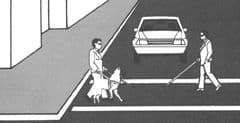
The primary traveling aids for a person who is bullheaded are often either a white cane or a trained guide canis familiaris. Independent travel involves some risk that can exist greatly reduced when you, the commuter, are enlightened of the use and meaning of a white cane or guide canis familiaris.
Drivers must always yield the correct-of-way to persons who are blind. When a pedestrian is crossing a street or highway guided by a dog or carrying a white pikestaff (or a white cane with a cherry-red tip), vehicles must come to a complete stop.
School Buses
On a two-way street or highway, all drivers moving in either management must cease for a stopped schoolhouse bus which is picking up or dropping off children. You must remain stopped until all children are clear of the roadway and the bus signal has been withdrawn. Violation of this law is considered a moving violation and is discipline to a mandatory hearing.
If the highway is divided by a raised bulwark or an unpaved median at to the lowest degree v feet wide, yous do not accept to stop if you are moving in the contrary direction of the omnibus. Painted lines or pavement markings are non considered to be barriers. If you lot are moving in the same direction as the jitney, you must always end — and non go frontwards until the charabanc finish betoken has been withdrawn.
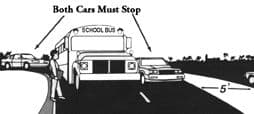
BOTH CARS MUST Finish!
School Crossings
Crossing guards are posted in areas where information technology is unsafe for children to cross alone. When you come across a guard, reduce your speed every bit yous near a school and children are in the area. Watch for school zone posted speed and stop if necessary at the marked stop lined simply never in the cross walk. Obey signals from any crossing guard. Information technology is the driver'due south responsibleness to do everything possible to avoid colliding with pedestrians. Remember, children are unpredictable. Do your part to make every crossing a safety crossing.
Public Transit
All drivers should yield the right-of-way to public transit coach traveling in the same direction which has signaled and in reentering the traffic flow from a specifically designated pullout bay.
Funeral Processions
Pedestrians and drivers must yield the right-of-fashion to funeral processions. When the first vehicle in the funeral procession lawfully enters an intersection, other vehicles in the procession must have their headlights on equally a signal to other drivers not to drive between or interfere with the procession while it is in move unless directed to do and then by a police force officer.
Driveways
Driveways form an intersection with sidewalks. Motorists must yield to bicyclists and pedestrians on the sidewalk.
Emergency Vehicles
Pedestrians and drivers must yield the right-of-way to police force enforcement cars, fire engines and other emergency vehicles using sirens and/or flashing lights. Pull over to the closest edge of the roadway right away and cease until the emergency vehicle has passed. Do not cake intersections.
When driving on interstate highways or other highways with ii or more lanes traveling in the direction of the emergency vehicle, and except when otherwise directed by a law enforcement officer, drivers approaching a law enforcement or other authorized emergency vehicle parked on a roadway with their emergency lights activated, volition exist required to leave the lane closest to the emergency vehicle, equally soon as it is safe to do so.
When approaching a law enforcement or other authorized emergency vehicle parked on a two-lane roadway with their emergency lights activated, and except when otherwise directed by a law enforcement officer, drivers volition be required to slow to a speed that is 20 miles per hour less than the posted speed limit when the posted speed limit is 25 miles per hour or greater; or travel at 5 miles per hour when the posted speed limit is xx miles per hour or less.
Making Turns
Turning a corner may seem to be a simple operation, just many traffic crashes are caused by drivers who do not turn correctly.
There are nine steps in making a skilful plough:
- Make upwardly your mind most your plow before y'all get to the turning point. Never make "terminal minute" turns.
- If you must modify lanes, look behind and to both sides to see where other vehicles are located before making your plough.
- Motility into the correct lane as yous nearly the intersection. The correct lane for the correct turn is the lane next to the correct edge of the roadway. On a two-lane route with traffic in both directions, an approach for a left turn should be fabricated in the office of the right half of the roadway nearest the center line.
- Requite a plough signal for at least the last 100 anxiety before you make your turn. Allow other drivers know what you are going to exercise.
- Ho-hum downward to a safety turning speed.
- When you are slowing to make a right turn, the bicyclist you passed may be catching up to you. Search over your shoulder before turning. Yield to bicyclists and pedestrians.
- Yield to pedestrians who may be crossing your path when turning left. Ever scan for pedestrians before starting the plough.
- Brand the turn, staying in the proper lane. Yield the right-of-mode to vehicles (including bicycles) coming from the opposite direction.
- Terminate your turn in the proper lane. A right turn should be from the right lane into the correct lane of the roadway entered. A left turn may be completed in any lane lawfully available, or safe, for the desired direction of travel. See diagrams for making left turns from or into one-way streets.
If you attain an intersection where y'all wish to make a correct or left plough and are not in the proper lane, you lot should drive to the next intersection. Then make the turn from the proper lane.
Study these diagrams showing lanes to use in making turns.
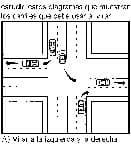
Left and Right Turns
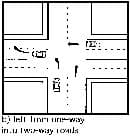
Left from one-way into 2-way
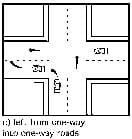
Left from i-way into ane-way roads
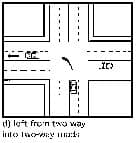
Left from two-manner onto two-ways roads
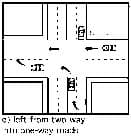
Left from ii fashion onto ane-way roads
Bike Lanes at Intersections
Slow down and expect for bicyclists. Indicate your turn prior to crossing through the cycle lane at the dashed striping. Yield to any bicyclist. Complete the turn from the designated correct turn lane.
If there is no right turn lane, after checking to make sure that no bicyclists are nowadays, you may enter the wheel lane at the intersection or driveway.
Turnabout (3-Point Turn)
Sometimes you lot volition need to turn your car around in a very small space. Use a three-indicate turn simply if the route is too narrow for a U-plow and you can't get around the cake. To make a iii-point turn:
- Move as far right every bit possible, cheque traffic, and signal a left plow.
- Turn the steering wheel sharply to the left and move forwards slowly. Stop at the curb, or border of roadway.
- Shift to contrary, plow your wheels sharply to the right, cheque traffic, and back your vehicle to the right curb, or edge of roadway.
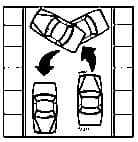
You lot can now movement in the opposite direction. Check traffic, and move forward. Never brand a three-point plough or a U-plough on a curve, a colina, or when a sign indicates that making a u-turn is prohibited.
Turn Signals and Emergency Signals
You must utilise hand signals or directional signals to testify that you lot are about to plough.
It is against the law to use your directional signals to tell drivers behind you that they tin can pass. Four-way emergency flashers should only be used while your vehicle is legally stopped or disabled on the highway or shoulder.
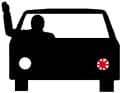 right turn
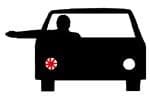 left turn
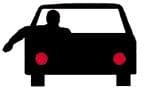 boring or stop
Traffic Lanes
Always drive on the right side of a two-lane highway except when passing. If the road has iv or more lanes with 2-fashion traffic, drive in the right lanes except when overtaking and passing.
Left lanes on some interstate roads are reserved for machine pool vehicles with two or more occupants in the auto — watch for diamond signs in the median. The eye lane of a three-lane or five-lane highway is used simply for turning left.
If you see red reflectors facing you on the lane lines, you are on the wrong side of the road. Go into the proper lane immediately! If yous see red reflectors on the lines on the edge of the route, you lot are on the wrong thruway ramp. Pull over immediately! Cerise reflectors always mean you are facing traffic the incorrect way and could have a head-on standoff.
Blind Spots
Bullheaded spots are areas near the left and right rear corners of your vehicle that you cannot see in your rearview mirrors. Earlier you move sideways to alter lanes on an expressway or to pass on any road, turn your head to make certain these areas are clear.
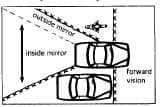
Areas bordered by X'south are blind spots for a automobile with an outside mirror on the left side just.
On the roads with more one lane in each management, practice not drive in someone else's blind spot. Speed up or drop back then the other driver tin see yous.
Passing
- Stay a condom distance behind the vehicle you desire to pass. The closer you go to the vehicle yous want to pass, the less you can come across alee. This is particularly truthful when passing trucks, trailers, and other large vehicles.
- Earlier yous pull out to pass, cheque your blind spots and brand sure that you accept plenty of time and room to pass.
- On a two-lane road, tap your horn, or at night glimmer your headlights to permit the other commuter know yous are passing.
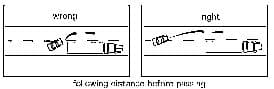
- Requite your point before yous move into the left lane.
- Do not render to the right side of the road until y'all can see the vehicle y'all passed in your rearview mirror.
- You must return to the right side of the road earlier coming within 200 feet of whatsoever vehicle coming from the reverse management.
- Passing on the correct is but legal when at that place are two or more than lanes of traffic moving in the same management or the vehicle y'all are passing is making a left plow. Pulling off the pavement to pass on the right is confronting the law.
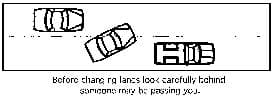
Being Passed
- The commuter of the automobile behind passed must not increase speed until the laissez passer is consummate.
- Aid other drivers laissez passer you lot safely. Move to the right side of your lane to requite them more room and a better view of the road ahead.
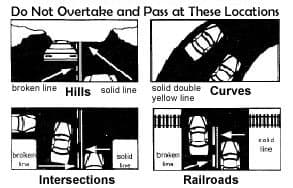
When You May Not Laissez passer
You may not pass on a two-lane road with traffic moving in opposite directions nether these conditions:
- Where you see a "Exercise NOT Pass" or "NO PASSING ZONE" sign.
- Where a solid xanthous line is painted on your side of the heart line.
- On hills or curves.
- At intersections.
- Within 100 feet of a bridge, viaduct, tunnel, or railroad crossing.
Violators may be arrested or issued a ticket.
Minimum Prophylactic Following Distances
Get out plenty of infinite between you and the car ahead. If information technology stops quickly, yous volition need time to run across the danger and finish.
Using the Two-Second Dominion
At any speed, yous can use the two-2d dominion to come across if you are far enough behind the motorcar in front of you:
- Lookout the vehicle alee pass some fixed point — an overpass, sign, debate corner, or other marker.
- Count off the seconds information technology takes yous to reach the same spot in the road ("one 1000 and one, one grand and two...").
- If you achieve the mark before you stop counting, you are following too closely. Slow downwards and check your following distance over again.
The two-second rule applies to any speed in skillful weather and road weather condition. If road or weather conditions are not expert, double your following distance. Yous should also double your following distance when driving a mobile home or towing a trailer.
Parking
When parking on a public road, move as far abroad from traffic as possible. If there is a roadside shoulder, pull equally far onto it as you can. If there is a curb, pull close to information technology — yous must not park more than i pes away.
Always park on the right side of the roadway, unless information technology is a 1-way street.
Make sure your vehicle cannot move. Set the parking brake and shift to park with an automatic manual or reverse with a manual transmission. Plough off the engine and lock the vehicle. Florida law requires that you take the keys out of your vehicle before leaving it. E'er check traffic behind yous before getting out, or go out on the curb side.
Earlier you leave any parked position, look over your shoulder to the rear to brand certain the style is articulate. Requite the proper turn signal if driving from a adjourn and yield to other traffic.
Parking on Hills
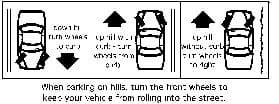
When parking on hills:
- Turn your wheels so that if your car starts to motility past itself it will roll away from traffic or into the curb. Study the diagram provided.
- Prepare the parking restriction.
- Put automatic gear shift in park. Shift manual gears to opposite (downhill) or starting time (uphill).
Straight-in Parking
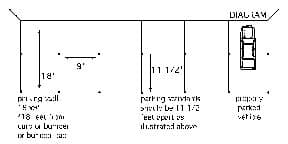
The rear markers represent the REAR corners of the parking space. The forward markers correspond the gauge Center of the parking infinite. When properly parked, the vehicle should exist centered inside the infinite with no part of the vehicle extending out into the traffic lane.
Where Parking is not Allowed
- On the roadway side of some other parked vehicle (double parking).
- On crosswalks.
- On sidewalks.
- In front of driveways.
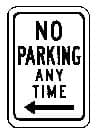
- Past curbs painted yellow or where "No Parking" signs are posted.
- Inside intersections.
- Within 15 feet of a burn down hydrant.
- Within 20 feet of an intersection.
- Within 20 feet of the entrance to a burn, ambulance or rescue squad station.
- Inside fifty feet of a railroad crossing.
- On the hard surface of a highway where parking spaces are not marked.
- On any span or overpass or in any tunnel.
- Within 30 feet of a rural postal service box on a state highway between 8 a.m. and 6 p.m.
- Within thirty feet of any flashing indicate, stop sign or traffic betoken.
- In such a manner that you block or create a take chances for other vehicles.
Parking Lights
Parking lights must be used at nighttime on any vehicle parked on a roadway or shoulder outside of cities and towns.
Driving with parking lights only (in identify of headlights) is against the law.
Parking Privilege for Disabled
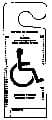
Disabled persons do not have to pay parking fees on whatever public street, highway, or metered infinite. Their vehicles must display a valid parking placard from the rearview mirror or on the front dash. These may exist obtained from a tag agent or tax collector's part and must exist renewed every four years.
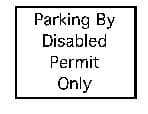
Disabled persons must park in spaces reserved for the disabled when possible. These spaces are marked by the wheelchair symbol and "Parking past Disabled Permit But" signs. Vehicles illegally parked in spaces reserved for the handicapped will exist ticketed and may be towed.
- Proof of Eligibility: Statement from a physician licensed in the Usa, the Segmentation of Bullheaded Services of the Department of Education, or the Veterans Administration to the effect that bidder is a severely physically disabled individual with permanent mobility problems which substantially impair his or her ability to ambulate or is certified as legally blind.
Process
- Contact your local County Tax Collector or Tag Agent.
- Complete HSMV 83039 "Application for a disabled person's parking let."
- Provide Proof of Eligibility — Doc's Statement.
- Pay $1.50.
- Pay $xv.00 for temporary disabled person parking permit.
- Present valid Florida driver license or identification card.
Expressway Driving
Expressways — also called interstate highways, freeways, and turnpikes — are multiple-lane roads with no end signs, traffic lights, or railroad crossings. For these reasons, expressways can give y'all a fast, safe way to go where you need to go.
Pedestrians, hitchhikers, bicycles, beast-drawn vehicles or motor-driven cycles and motor scooters with 150 cubic centimeter displacement or less are not allowed on expressways.
Entering and Leaving Expressways
Vehicles can enter and exit expressways only at sure points. Because expressway traffic is unremarkably moving at or close to the maximum speed immune, you lot need to know how to enter and exit safely.
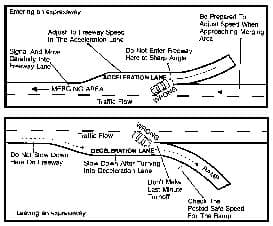
All throughway entrances have three basic parts: an entrance ramp, an acceleration lane, and a merging expanse. Follow these guidelines to enter an expressway safely:
- On the entrance ramp, begin checking for an opening in traffic. Signal for your turn.
- As the ramp straightens into the dispatch lane, speed up. Try to adjust your speed and so that you tin move into the traffic when you reach the end of the dispatch lane.
- Merge into traffic when you can practise so safely. You must yield right-of-way to traffic on the expressway. Y'all cannot always count on other drivers moving over to give you room to enter, merely practise non stop on an acceleration lane unless traffic is too heavy and at that place is no space for you lot to enter safely.
When leaving an expressway:
- Get into the exit lane. Posted signs will tell y'all which ane. Virtually thruway exits are from the correct lane.
- Point your intention to leave the expressway by using your plow signals.
- Dull down every bit soon as y'all are off the expressway. Check the posted safe speed for the go out ramp.
- Do not make last-minute turns into an get out. If you become past your leave, you must become to the side by side one.
Throughway Safety Reminders
- Plan your trip. Know just where you will go on and get off.
- Bulldoze in the right lane and pass on the left. If there are three lanes, use the right lane for lower speed driving, the left for passing. If you stay in the right lane, watch for cars entering the expressway. Suit your speed or movement into the center lane so they tin enter safely.
- Never stop on the pavement, shoulder, or connecting ramp of an expressway except in an emergency. If your vehicle breaks downwards, information technology may be parked on the side of the expressway (completely off the pavement) for no more than half dozen hours. Raise your hood and necktie a white cloth to your antenna or left door handle to evidence you need help.
- Never dorsum up on an expressway archway ramp or exit ramp. The only exception to this would be if you are trying to enter an express way through an go out. In this case, you lot would see a "WRONG WAY" or "DO NOT ENTER" sign. Then y'all must support or plow around.
- Do not cross, bulldoze on or park on the median strip.
- Practice not follow likewise closely. Rear end collisions are the greatest danger on expressways. Always go out room for emergency stops.
- Stop driving when you feel tired. On long trips the hum of the engine and your lack of movement can make you experience sleepy. End for a cup of coffee, a brusque walk, or a nap. Do non hazard declining asleep at the bicycle.
- Stay out of other drivers' blind spots.
- Beware of turnpike hypnosis. Continuous throughway driving can become monotonous. Avert staring. Become into the habit of shifting your optics left and right and using rearview mirrors.
Night Driving
You volition demand to drive with actress care at nighttime. You cannot see as far ahead or to the side, and glare from oncoming cars can reduce your vision even more. Follow these guidelines for driving at night:
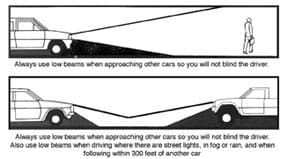
- Utilise your headlights (depression axle or high beam) between the hours of sunset and sunrise.
- Depression axle headlamps are only constructive for speeds up to 20-25 mph. Y'all must use special intendance when driving faster than these speeds, since you are unable to detect pedestrians, bicyclists and others.
- High beam headlights can reveal objects upwardly to a distance of at least 450 anxiety and are nigh effective for speeds faster than 25 mph.
- Don't use high-axle headlights within 500 feet of oncoming vehicles.
- If you lot are behind other vehicles, use depression beams when y'all are inside 300 feet of the vehicle ahead.
- When leaving a brightly lit place, drive slowly until your eyes abound used to darkness.
- If a vehicle comes toward you lot with loftier beams, flash your lights to loftier axle and dorsum to low axle once.
- Don't look direct at oncoming headlights. Instead, watch the right edge of your lane. Wait speedily to be sure of the other vehicle'due south position every few seconds.
- Drive as far to the right as you can if a vehicle with one lite comes toward yous.
Animals
Wild and domestic animals may move unpredictably towards or across the travel path of an budgeted motor vehicle. When an beast is seen in the road or on the road shoulder, you should irksome downwardly and, if necessary, yield the correct-of-way. Be especially careful in rural areas at dark. Often an animal'southward optics shining in the headlight beams will be seen offset.
Employ reasonable care when approaching a person who is riding or leading an fauna upon the roadway or shoulder of the road. Horses have poor side vision and are easily frightened by loud noises or sudden movements.
Fog or Smoke
Information technology is best not to drive in fog or smoke. If y'all must, slow downwards, plough on your low beam headlights, and be ready for a fast end. Use windshield wipers in heavy fog. If the fog or smoke becomes so thick that y'all cannot see well enough to continue driving, pull all the way off the pavement and stop. Plough on your emergency flashers.
Rain
The first few drops of rain mean danger. Roads are about slippery just after the rain begins, because oil dropped from cars has not been done away. Wearisome downwardly and programme for at least two times the normal stopping distance.
In a heavy rain, your tires can ride on a thin film of water, similar skis. This is called hydroplaning. When your tires are not touching the road, y'all can hands lose control and skid. Proceed your tires on the route by slowing down when it rains, and by having tires with the correct air pressure and practiced tread.
Brakes oft become moisture afterward driving through deep water or driving in heavy rain. They may pull to i side or the other, or they may not hold at all. If this happens, slow down and gently button on the restriction pedal until your brakes are working again.
Reduced Visibility
You must plow on your depression axle (dim) headlights when driving at any fourth dimension between sunset and sunrise including the twilight hours between sunset and sunrise including the twilight hours between sunset and total night or between full nighttime and sunrise. You lot must also use these lights during any rain, smoke or fog. Parking lights do not meet requirements of this law.
Treatment Emergencies
When you lot are driving, things can happen very quickly. Y'all may take only a fraction of a 2d to make the right motion. Follow these guidelines for handling emergencies.
Breakdowns
- If possible, park where the disabled vehicle tin be seen for 200 feet in each management.
- Move the vehicle so all four wheels are off the pavement.
- Turn on your emergency flashers.
- Become all passengers out on the side away from traffic.
- Tie a white cloth on the left door handle or antenna.
- Raise the hood.
Tire Blowout
- Do not utilise brakes.
- Concentrate on steering.
- Slow down gradually.
- Brake softly when the motorcar is nether command.
- Pull completely off the pavement.
Wet Brakes
- Examination brakes lightly after driving through deep water.
- Brakes may pull to i side or may non hold at all.
- Dry out brakes past driving slowly in depression gear and applying brakes.
Correct Wheels off Pavement
- Take your human foot off the gas pedal.
- Hold the wheel firmly and steer in a straight line.
- Brake lightly.
- Wait until the road is clear.
- Plow back on the pavement sharply at boring speed.
Auto or Motorcycle Approaching in your Lane
- Sound your horn.
- Restriction sharply.
- Steer for the side of the road or the ditch.
Jammed Gas Pedal
- Go on your optics on the road.
- Tap the gas pedal with your foot.
- Endeavor to pry the pedal upwards with the toe of your shoe.
- Shift into neutral.
- Turn off the ignition. (Do not turn the key to lock, or your steering will lock.)
- Use your brakes.
Brake Failure
- Pump the brake pedal hard and fast.
- Shift to a lower gear.
- Utilise the parking brake slowly, so y'all exercise not skid.
- Rub your tires on the curb to slow your vehicle, or pull off the route into an open up infinite.
Skidding
- Take your foot off the gas pedal.
- Practice not use your brakes, if possible.
- Pump the brakes gently if you are nigh to hit something.
- Steer the motorcar into the direction of the slip to straighten the vehicle out. Then steer in the direction y'all wish to go.
Burn
- If the burn is small and you have a portable extinguisher, you should attempt to extinguish the fire.
- If yous cannot extinguish the burn down and it continues to get larger, become away from the vehicle, due to the presence of toxic fumes and the possibility of explosion.
- Never apply h2o to a gasoline or diesel fire.
Sharing the Route with a Truck
Whether y'all are sharing the road with a car, truck, bus, or other large vehicle, it's important for condom'southward sake to obey traffic laws, abide by the rules of the route, and bulldoze defensively.
Are there any special rules for sharing the road with a truck?
Yes! Hither are some suggestions from professional truck drivers:
The No-Zone
- Side Blind Spots. Trucks and buses have much larger bullheaded spots on both sides than do passenger cars. If a commercial driver needs to swerve or alter lanes for any reason, contact with the car in such a spot tin occur.
- Rear Bullheaded Spots. Unlike passenger cars, trucks and buses accept deep bullheaded spots directly behind them. Tailgating profoundly increases your chances of a rear-end collision with a commercial vehicle.
- Dangerous Passing. Another No Zone is but in front of trucks and buses. When passing a bus or truck, be sure y'all can see the cab in your rear view mirror before pulling in forepart.
- Broad Right Turns. Truck and charabanc drivers sometimes demand to swing wide to the left in order to safely negotiate a right plough. They cannot run across cars directly behind or beside them. Cutting in betwixt the commercial vehicle and the adjourn or shoulder to the right increases the possibility of a crash.
- Bankroll Upwardly. When a truck is backing upwards, it sometimes must block the street to maneuver its trailer accurately. Never cross behind a truck that is preparing to support or is in the process of doing so. Remember, most trailers are viii and a half anxiety wide and can completely hide objects that suddenly come betwixt them and loading areas. Automobile drivers attempting to pass backside a truck enter a blind spot for both drivers.
Passing
- When passing a truck, get-go cheque to your front and rear, and move into the passing lane only if it is clear and yous are in a legal passing zone. Allow the truck commuter know yous are passing past blinking your headlights, especially at dark. The driver will brand information technology easier for you by staying to the far side of the lane.
- On a level highway, it takes but 3 to v seconds longer to pass a truck than a motorcar. On an upgrade, a truck often loses speed, so it is easier to pass than a car. On a downgrade, the truck'southward momentum will cause it to get faster, so you lot may need to increment your speed.
- Complete your pass as quickly as possible, and don't stay alongside the other vehicle.
- If the driver blinks his lights after you pass, it's a betoken that it is clear to pull back in. Be sure to move back only when you tin can see the front of the truck in your rearview mirror. Afterwards y'all pass a truck, maintain your speed.
- When a truck passes you, you can help the truck driver by keeping to the far side of your lane. Y'all'll make it easier for the truck commuter if you reduce speed slightly. In any event, do non speed upwards while the truck is passing. After passing, the truck driver volition indicate to let you lot know that the truck volition be returning to your lane.
- When you lot encounter a truck coming from the reverse management, keep every bit far equally possible to the side to avert a sideswipe accident and to reduce the wind turbulence between the ii vehicles. Retrieve that the turbulence pushes the vehicles apart. It does not suck them together.
Following a Truck
- In general, trucks take slightly longer than cars to stop because of their size. Yet, at highway speeds or on moisture roads, trucks may take better traction and stability allowing them to stop more quickly. A machine post-obit also closely may not be able to stop quickly enough to avoid rear-ending the truck.
- If you are following a truck, stay out of its "blind spot" to the rear. Avoid following too closely, and position your vehicle so the truck driver can see it in his side mirrors. Then you volition have a good view of the route ahead, and the truck driver can requite you lot plenty of alert for a stop or a turn. You will accept more time — to react and make a safety finish.
- When you follow a truck at night, always dim your headlights. Bright lights from a vehicle behind will bullheaded the truck driver when they reflect off the truck'south large side mirrors.
- If you are stopped behind a truck on an upgrade, get out infinite in instance the truck drifts back slightly when it starts to move. Besides, keep to the left in your lane then the driver can see that you're stopped behind the truck.
Sharing the Road with a Bicycle
- Allow 3 feet of clearance when passing a cyclist. Reduce your speed if the roadway is narrow.
- After parallel parking, check for cyclists earlier opening the driver'due south side door.
- At night, avoid using high-beam headlights when a cyclist is approaching. The cyclist could exist temporarily blinded.
- Do not follow a cyclist closely. If you lot are likewise close and the cyclist must lay down their bicycle down on the road in an emergency, you could run them over.
Sharing the Road with a Motorbike
- When you follow a motorcycle, remember that motorcycles have the ability of stopping much more quickly than other vehicles in emergencies. Following too closely endangers your life and that of the motorcyclist. Do not follow a motorcyclist closely.
- Sentinel for motorcycles before turning and yield right of style.
- Include motorcycles in your visual search blueprint.
- Do non share the lane with a motorcycle. The motorcyclist needs the room to maneuver safely and is entitled to the entire lane.
- When your automobile is being passed by a motorcycle, you should maintain your lane position and speed. Permit the motorbike to complete the maneuver and assume proper lane position equally quickly as possible.
- Do not follow the motorcycle closely. Motorcycles tin stop in a shorter distance than a car.
- In traffic, particularly in inclement weather or under certain road weather, motorcycles operate differently than other vehicles:
- Wind gusts can motion a motorcycle across an entire lane.
- Wet or icy roads impair a motorcyclist'due south ability to restriction and maneuver.
- Potholes or railroad tracks, frequently crave motorcyclists to change positions inside their lane.
- Gravel roads decrease traction and may cause a rider to tiresome downwards or brake where a car would non.
- Go to Affiliate iv
- Render to Table of Contents
Source: https://www.stateofflorida.com/defensive-driving/
0 Response to "Motorcyclists Can Gain Extra Traction on a Wet Road Surface by"
Post a Comment